


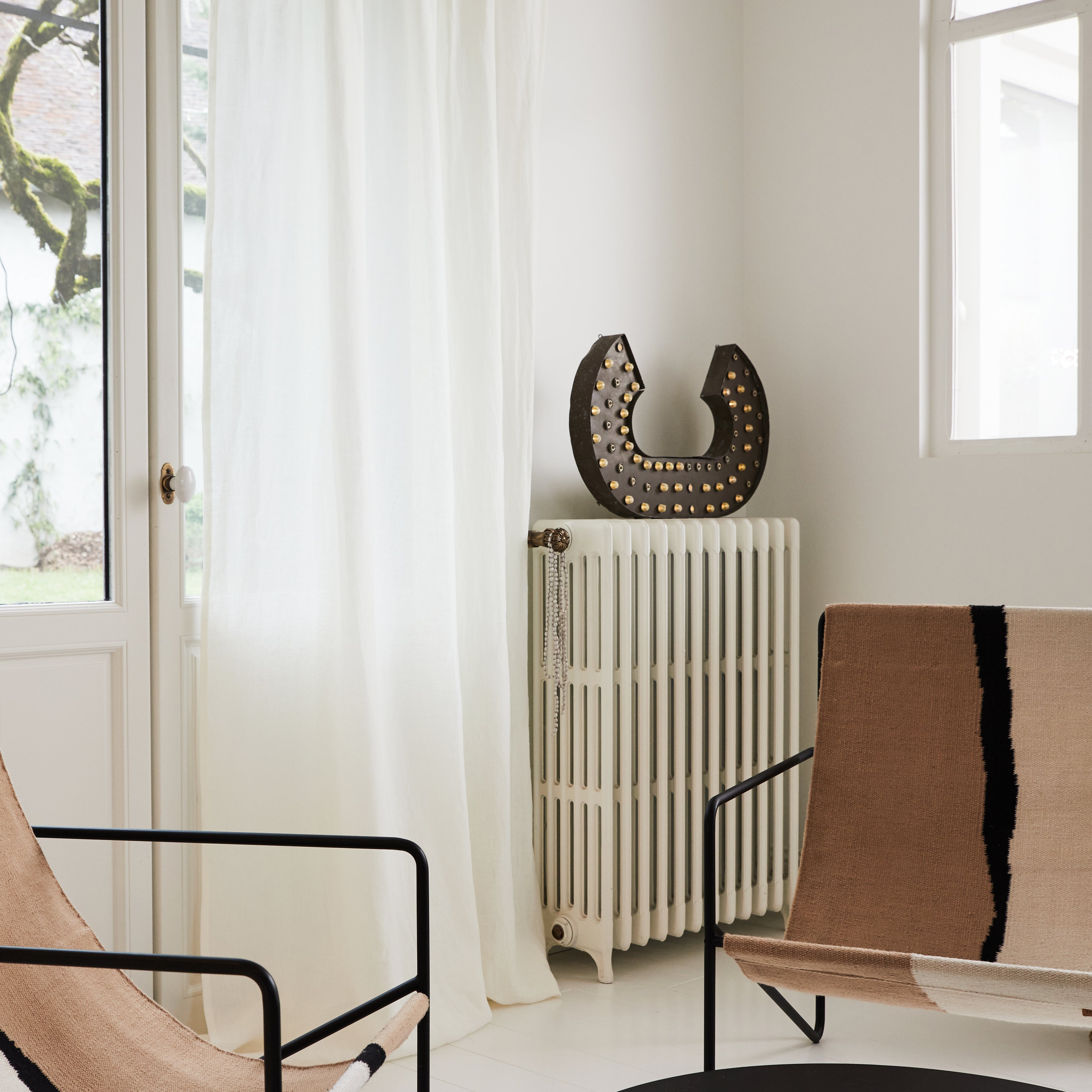
Choosing the right curtains means finding the perfect balance between light, material, and the proportions of the room. A light voile softens a window, washed linen adds texture, while a colored or striped fabric can give a whole new personality to your décor.
To choose your curtains, start by determining how much light you want to retain, then select a material suited to the desired atmosphere. Length, fabric fullness, and color are just as important: they will give your curtains a natural drape and a harmonious presence in the room.
Key takeaways
For a harmonious décor, opt for floor-length curtains with enough width to form beautiful folds. Choose a linen or cotton voile to keep a room bright, a denser fabric for more privacy, and a shade that complements the materials already present in your home.
1. Which material should you choose for your curtains?
The material is probably the first thing to consider. It determines how the curtain drapes, its transparency, its texture, and how it reacts to light.
Two curtains of the same color can have very different effects depending on their weave. A soft fabric follows the movement of the air, while a more structured fabric creates regular folds and gives the window a more pronounced presence.
Washed linen: a natural and timeless material
Washed linen has a lively texture and a slightly rumpled appearance that give it a lot of character. Its soft drape is equally suited to country homes and more minimalist interiors.
It pairs particularly well with wood, stone, ceramics, and natural fibers. In a living room with neutral colors, cream linen curtains create a soft continuity between the walls, windows, and furniture.
Washed linen is not necessarily opaque. Depending on its thickness and weave, it can let in diffused light while reducing direct views from the outside.
Linen voile: filtering light without losing it
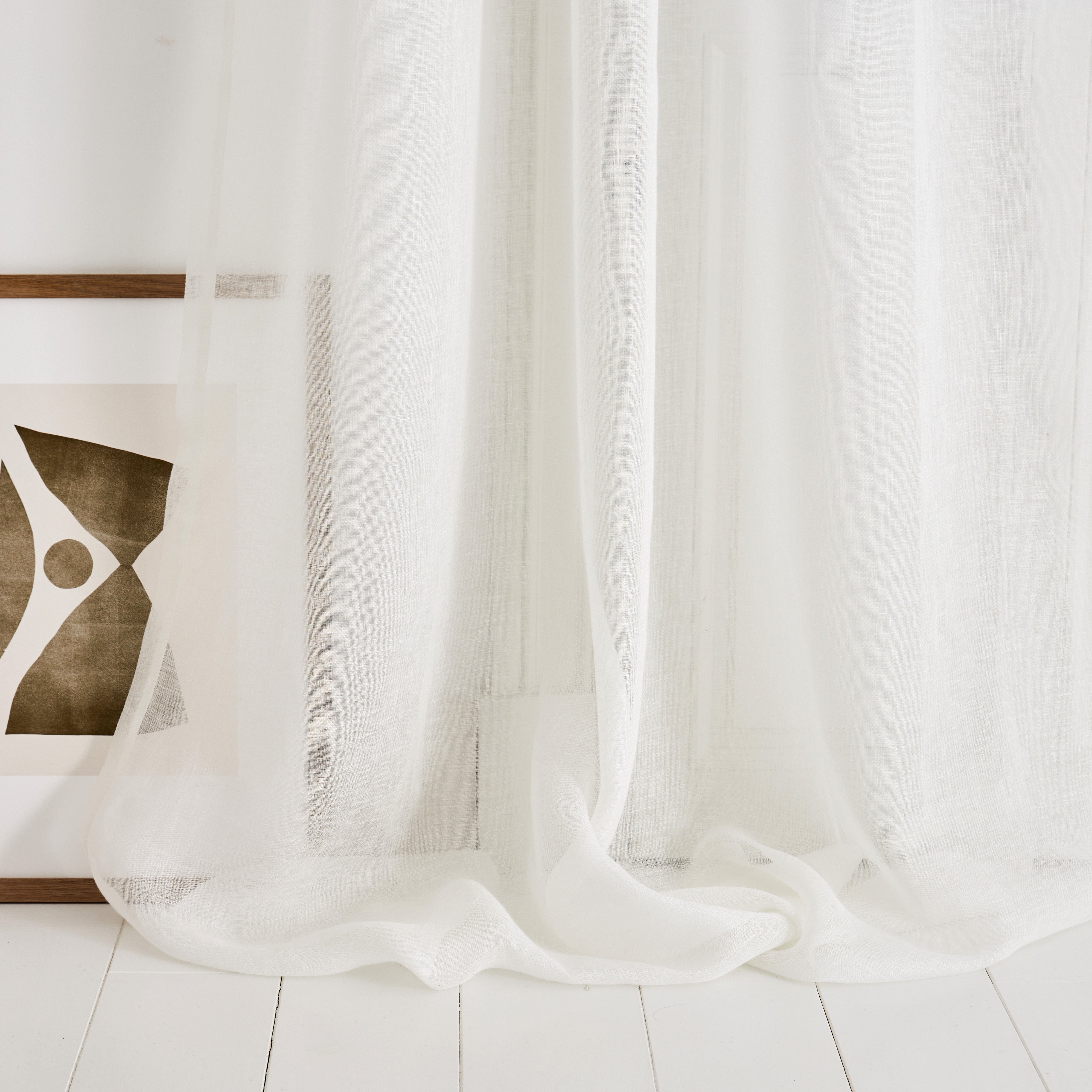
A linen voile is particularly interesting in a room you want to keep bright. It softens direct light, reduces contrast, and reveals the movement of the fabric.
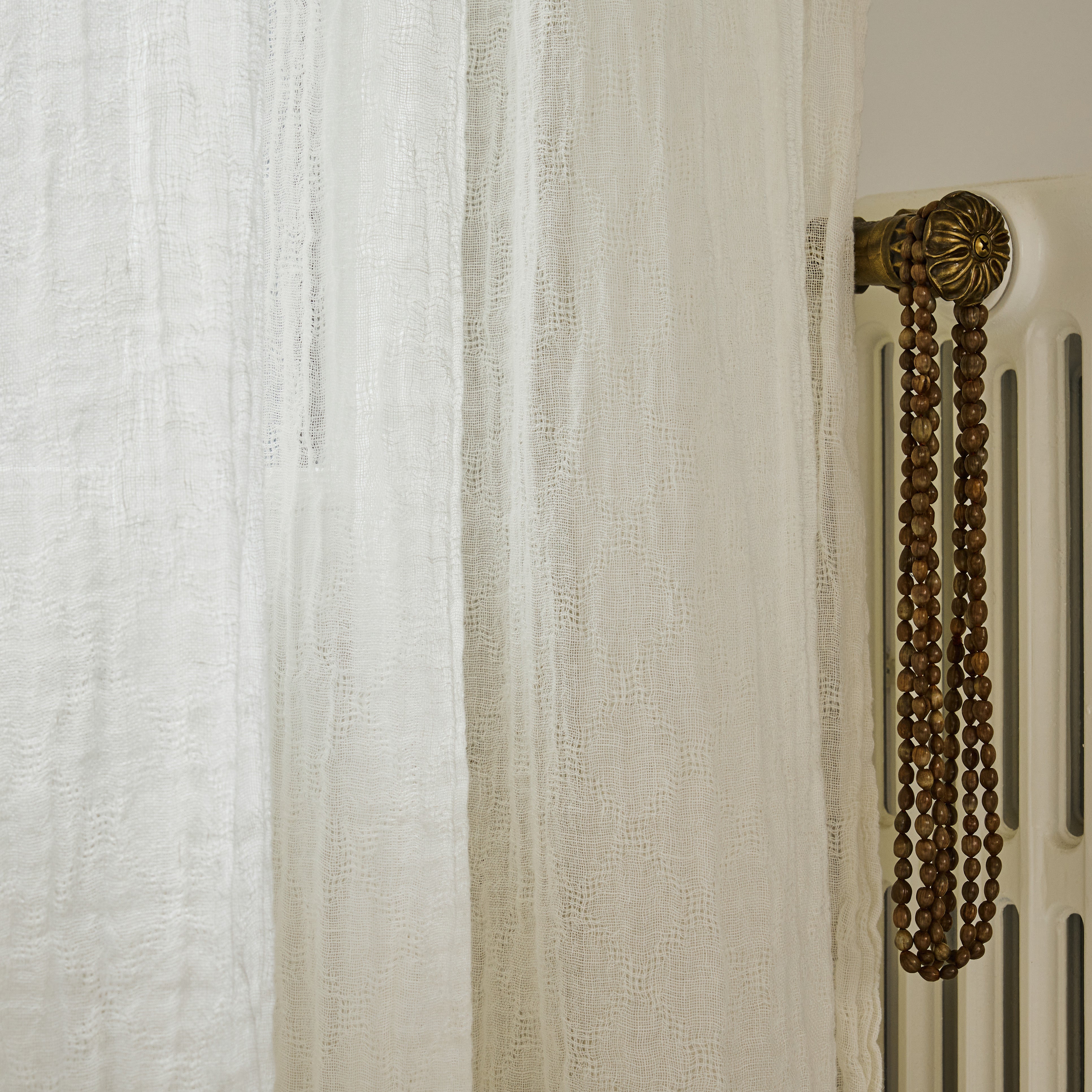
Choosing a slightly textured weave also adds dimension. A subtle pattern can become visible when light passes through the curtain without dominating the décor.
Cotton gauze: a more relaxed softness
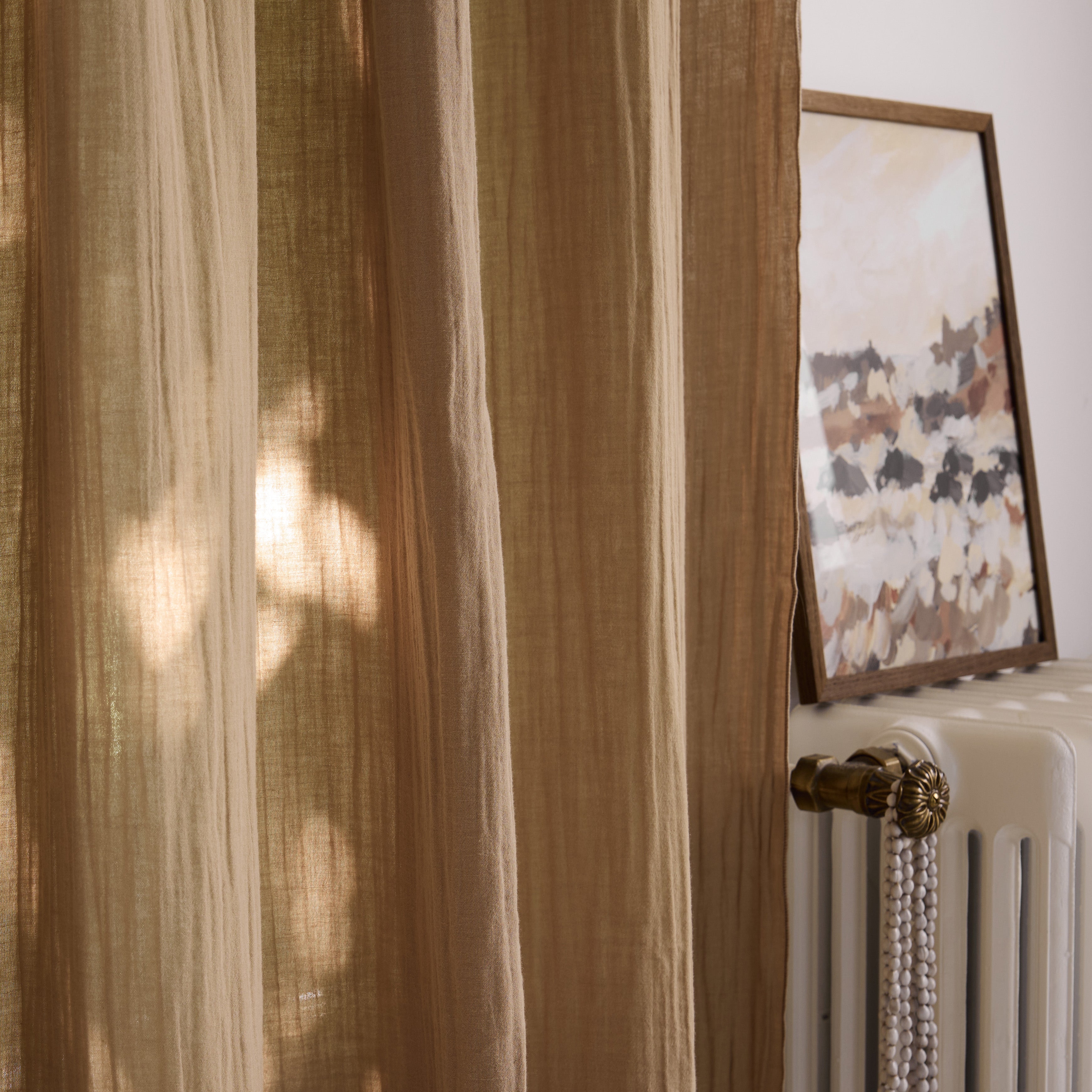
Double cotton gauze stands out for its slightly crinkled appearance and softness. It has a less formal drape than some traditional fabrics, with natural folds that enhance the feeling of comfort.
This material fits easily into a bedroom, family living room, or office. Double cotton gauze curtains are particularly suited to interiors where you want a welcoming atmosphere without looking too formal.
In our selection, the Ficelle curtain perfectly illustrates this approach: its natural shade and soft fabric allow a window to be dressed discreetly.
2. How to choose the right length and width for your curtains?
Dimensions play an essential role in the decorative result. A curtain can be made from a beautiful material and lose much of its appeal if its length or fullness is not right.
Curtains that reach the floor
To make a room feel taller, opt for long curtains hung above the window and extending to the floor. This vertical continuity guides the eye and can create the impression of a higher ceiling.
Three types of drape are possible:
| Drape | Decorative effect | Guide |
|---|---|---|
| Skimming the floor | Clean and structured | Bottom of the curtain about 1 cm above the floor |
| Just touching the floor | Soft and natural | The fabric lightly touches the floor |
| Breaking on the floor | Generous and relaxed | About 3 to 8 cm of extra fabric |
These measurements are aesthetic guidelines. Washed linen or cotton gauze can easily accommodate a slight excess of length that highlights the softness of the material.
Allow enough width to form folds
Width is just as important as height. When the panels are too narrow, the fabric looks taut and the window lacks dimension.
To achieve soft folds, generally allow for a total fabric width between 1.5 and 2 times the width of the curtain rod. With a very light voile, greater fullness may be desirable.
For example, for a 160 cm rod, a total fabric width of about 240 to 320 cm will create a generous look. Two 140 cm panels can then form a possible combination, depending on the desired fullness.
Also consider placing the rod slightly wider than the window. The curtains will then be able to clear the sides and allow more natural light in when they are open.
3. Which curtain color should you choose for a harmonious décor?
Curtains cover a large area in a room. Their color therefore directly influences the overall atmosphere, sometimes more than a cushion, a vase, or a small piece of furniture.
Natural shades for a soft atmosphere
Off-white, cream, natural, sand, and beige pair easily with natural materials. These shades create continuity with light walls and help maintain a sense of space.
However, they are not all interchangeable. A slightly warm white will bring more softness than a very cool white, while a deep beige will create a subtle contrast against an ecru wall.
The choice should be made by observing the colors already present in the room, but also the light at different times of the day.
Warm colors to add character
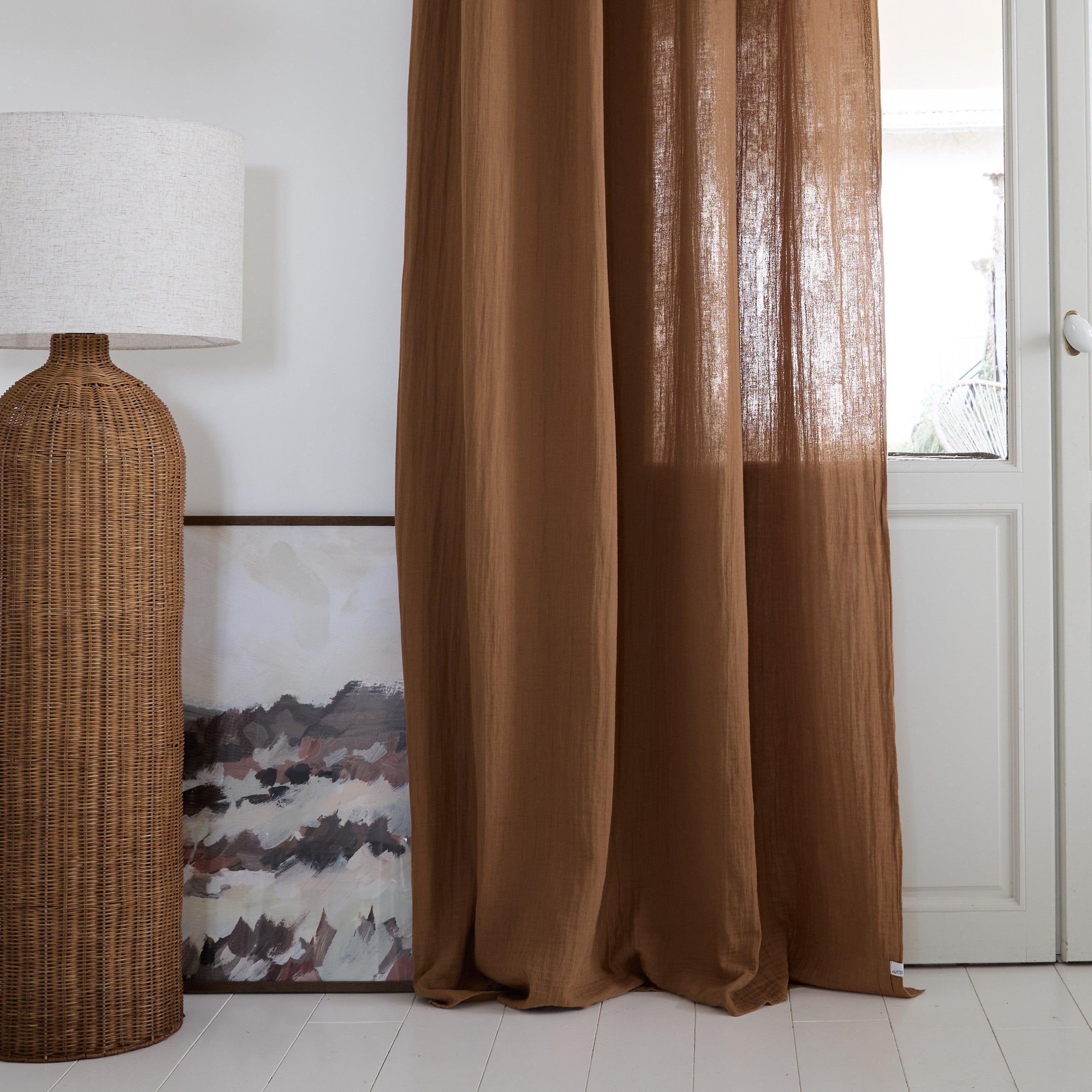
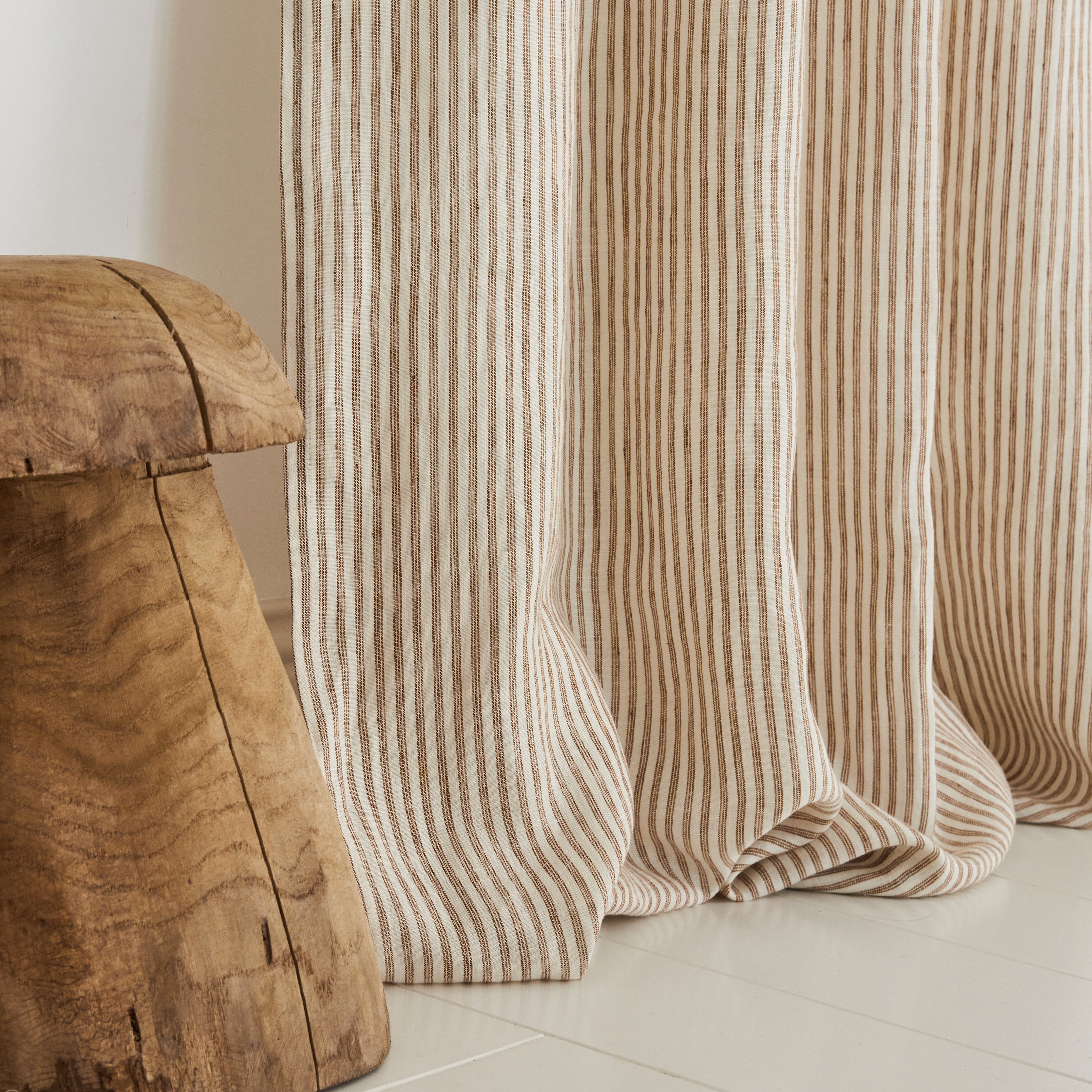
Camel, tobacco, or brown curtains can transform a room with light walls. These colors add depth and echo wood, leather, patinated objects, or plant fibers.
The contrast does not need to be very pronounced. An earthy shade placed near a window is sometimes enough to visually warm up the entire living room.
Stripes and patterns to add rhythm to the room
Patterned curtains allow you to introduce graphic rhythm without multiplying decorative accessories.
Fine vertical stripes emphasize the height of a window and discreetly structure the fabric. Wider stripes create a bolder effect, particularly interesting in a room where the furniture and walls are relatively understated.
Checks and woven patterns, meanwhile, bring a softer presence, reminiscent of household linens and country interiors.
4. Which curtains should you choose for each room?
There is no single right way to dress windows. The choice depends on the brightness, lifestyle, and atmosphere you want to create.
In the living room: prioritize light and materials
The living room is often the room where curtains play the most important decorative role. They frame openings, soften architectural lines, and contribute to the balance of the furniture.
Linen voiles, slightly sheer fabrics, and cotton gauze curtains are particularly interesting for maintaining beautiful brightness during the day.
In a very minimalist living room, a textured weave can add the dimension that the décor lacks, without requiring a colored pattern.
In the bedroom: create an enveloping atmosphere
In a bedroom, curtains help create a calm and restful atmosphere. Soft shades, supple materials, and generous drapes work particularly well with bed linen and dim lighting.
A washed linen or double cotton gauze curtain will soften the contours of the window. For a bedroom requiring darkness, however, you will need to plan for a blackout fabric or a suitable complementary device.
A decorative voile does not replace a blackout curtain, even if it reduces views from the outside.
In an office or passageway
A light curtain can bring warmth to an office without making the space look visually smaller.
Linen voile is particularly suited to this use: it diffuses light and reduces contrast while maintaining a sense of openness.
In an entryway or hallway, a fabric panel can also serve as a vertical decorative element and create a soft transition between two spaces.
5. How to coordinate your curtains with the rest of the décor?
To create a cohesive interior, it is not necessary to match the curtains to all other textiles. The main thing is to find a dialogue between materials, colors, and volumes.
In a room with a lot of wood and natural fibers, a washed linen curtain will extend this feeling of warmth. If the furniture is more graphic, a soft voile will provide an interesting contrast.
Openwork weaves also allow you to introduce dimension without imposing an additional color.
Our décor tip
Observe your room as a whole before choosing the color of the curtains. If the rug, cushions, and furniture already feature several patterns, opt for solid panels with a beautiful texture. Conversely, in a room with simple lines and neutral colors, fine stripes or a graphic weave may be enough to give the décor more personality.
Common mistakes to avoid when choosing your curtains
Choosing curtains that are too short
Curtains that stop for no reason a few centimeters above the floor can break the vertical continuity of the window. For a living space, a long drape is generally more harmonious.
Not allowing enough fabric
Panels that are too narrow give a taut appearance. Sufficient fullness creates beautiful folds, even when the curtains are closed.
Choosing solely based on color
Material and transparency matter as much as shade. An opaque white fabric and a white linen voile will not have the same presence or the same effect on light.
Accumulating too many patterns
When several textiles feature contrasting designs, the décor can lack visual rest. It is better to let certain elements express themselves and keep calmer surfaces around them.
Forgetting to check the hanging system
Pockets, rings, or clips do not produce exactly the same drape. Check the system provided for each model, as well as the dimensions and the number of panels required before making your choice.
Curtains that give a personality to the home
Curtains are among those discreet elements that can profoundly change a room. They complement the light, soften volumes, and bring the reassuring presence of textile materials.
Washed linen with soft folds, a delicately openwork voile, or cotton gauze with warm shades do not tell the same story. The right choice is the one that naturally finds its place among the materials, colors, and objects you already love.
At Le Petit Florilège, we favor curtains whose materials, textures, and shades fully contribute to the décor, beyond their simple function of dressing windows.
Discover our selection of curtains
Frequently asked questions about choosing curtains
How to choose curtains for a living room?
In a living room, opt for curtains that complement the natural brightness and the materials present in the décor. Washed linen and cotton gauze bring a soft texture, while a light voile allows you to dress the windows without darkening the room. Long panels generally create a more harmonious composition.
What is the right length for curtains?
For a natural drape, curtains can reach just above the floor, skim it, or form a slight break of a few centimeters. This last option particularly highlights soft materials like washed linen and cotton gauze.
What curtain width should you allow for a window?
To achieve soft folds, generally allow for a total fabric width of 1.5 to 2 times the width of the curtain rod. With a very lightweight voile, extra fullness can create a more airy effect. The hanging system should also be taken into account.
What is the difference between linen curtains and cotton curtains?
Linen has a naturally irregular texture, a lively drape, and a slightly rumpled appearance. Cotton can offer varied results depending on its weave. In double gauze, it creates a soft, gentle, and slightly crinkled curtain. The choice depends above all on the desired atmosphere.
Which curtains to choose to let light through?
Linen sheers and lightweight fabrics are particularly suited for retaining natural light. Their weave allows it to be diffused while softening contrasts. However, their transparency does not guarantee complete privacy, especially in the evening when the interior is lit.
Should you choose plain or patterned curtains?
Plain curtains create a calm atmosphere and highlight the fabric. Stripes, checks, and graphic weaves add more rhythm to the decor. In a room already rich in patterns, plain curtains are often easier to coordinate.
Which curtains to choose for a bedroom?
In a bedroom, soft fabrics and soothing colors contribute to a restful atmosphere. Washed linen and cotton double gauze are suitable for a natural decor. If the goal is to sleep in the dark, choose a suitable blackout solution to complement the decorative curtains.
